
While some industries have proven vulnerable to the recent economic downturn and record inflation, the pet consumer segment is an exception. In August of this year, Wetney Joseph, chief financial officer of Zoetis, the world's largest animal health company, said in a live broadcast, "If you look at the history of animal health, you will find that it has been proven to be recession-resistant. The pet demographics are trending toward millennials and Gen Z, who place more emphasis on the health of their pets."
The pet industry has a history of hundreds of years in the United States, and the proportion of households with pets has always remained above 60%, and will historically exceed 70% in 2020.
The report released by RET China Commercial Real Estate Research Center in September this year pointed out that the two most influential economic fluctuation nodes experienced by the United States since this century are the financial crisis in 2008 and the new crown epidemic in 2020. After the subprime mortgage crisis in 2008, the U.S. GDP growth rate dropped to -2.6% in 2009, but Pet Food spending in the same year still maintained a small increase; in 2020 due to the new crown epidemic, the U.S. GDP growth rate was -3.4%, but the national Pet consumption still increased by 7% year-on-year, and it has continued to grow around 2020.
In fact, since 2016, the growth rate of the US pet market has been higher than the growth rate of GDP per capita. Similarly, during the 10 years of economic downturn, the size of the Japanese pet market has not declined, and has always maintained a slight increase, increasing from 400 billion yen in 2010 to 500 billion yen in 2020.
Liu Lang, vice chairman of Xinruipeng Group, the largest pet medical chain organization in China, analyzed that with the development of material civilization, the connection between people is getting less and less, people's mental state is becoming more and more fragile, and pets have become A part of them they can count on, maybe even the only part. "People will rely more on pets during anxious and difficult times." He told China News Weekly.
On November 18 this year, Tianyuan Pet, a manufacturer of Cat Nest and Pet Bed Cushion, landed on the GEM. This is the third domestic pet economy company listed this year. Since 2022, despite facing multiple uncertainties such as the new crown epidemic and uncertain economic situation, from the financial report, many domestic pet companies have achieved significant growth in the first three quarters, with net profits of more than 30%.
In 2021, according to the "White Paper on China's Pet Industry in 2021", the size of China's entire urban dog and cat market will reach 249 billion yuan, a year-on-year increase of 20.6%. According to the latest report released by the China Business Industry Research Institute, the scale of China's pet consumption market in 2012 was only 33.7 billion yuan. Based on this calculation, the compound growth rate of China's pet market industry will be 24.88% from 2012 to 2021.
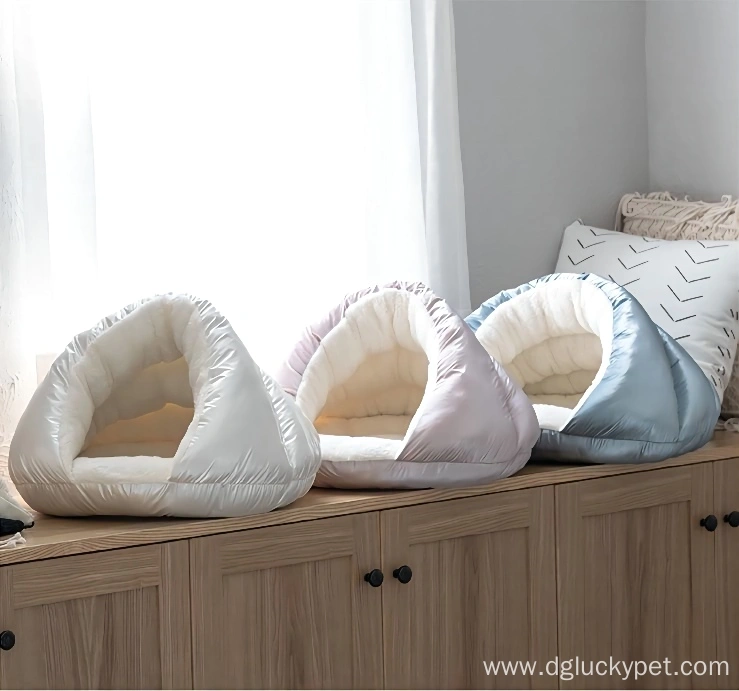
The pet industry refers to all the industrial chains around pets, involving pet breeding and trading, goods and services around pet consumption, including Pet Mat, Pet Housewares, Pet Medical, Pet Grooming Tools and pet services. From the perspective of subdivided industries, in 2021, among the 249 billion yuan market size of China's pet market, pet food, medical care, supplies and services accounted for 51.5%, 29.2%, 12.8% and 6.4% respectively.
From 2019 to 2021, the number of pet food and supplies brands in China will surge by 34%. In terms of pet medical care, according to the "Pet Industry Series Research Report" released by Ping An Securities in September 2021, from 2017 to 2021, there will be nearly 900 pet hospitals registered in China every year.
As pets become more and more companions and family members of human beings, the related industry chain is still developing, such as pet clothing, pet "behind affairs" services, etc. According to the data from Tianyancha, there are nearly 9,000 companies in China whose business scope covers pet funerals, pet funerals, and animal harmless treatment. Among them, the number of new companies will exceed 2,000 in 2021, with an annual registration growth rate of 101.43% .